

Therapy Intensives
Time and space to go deeper.
You know the drill. You spend the first 15 minutes of a standard therapy session recapping your week, 20 minutes getting to the real stuff, and then just as you’re on the verge of a breakthrough the hour is over and we have to tuck all that deeper work you opened up back in.
Integrated IFS and EMDR Intensives are designed to disrupt that cycle. We trade the 50-minute hour for deep-dive sessions to settle in, get internal permission to move towards core wounds, and have the space and time to reprocess the negative beliefs we have about ourselves to help them loosen their grip on our day to day lives.
Weekly therapy is a wonderful resource due to the support and ongoing therapeutic relationship.
And there are more paths to change.
Choose your Path
-

3-Day Deep Dive
Focused, Uninterrupted Work
Time for your whole system to be heard
Some patterns don't loosen in 50 minutes. Over three days, there's room for protective parts to relax, for Self to lead, and for the burdens you've carried to finally be witnessed, reprocessed, and set down. We never push faster than your system is ready to go.
Includes:
90-minute prep session with a personalized workbook
Up to 18 clinical hours over three consecutive days
90-minute integration session to support what shifts afterward
Written summary of care, with trailheads for continued exploration on your own or with your therapist
$3150 | 21 Clinical Hours
-

Alongside Regular Therapy
Make Space for Deeper Processing
Some systems need time to trust the process. This path lets you build gradually, with weekly therapy for support and extended sessions when you're ready to go deeper. Continue weekly with the therapist you already know and love, or start weekly therapy with me (space permitting). Either way, we move at the pace your system needs.
3 Hour Sessions, typically 1-2x/month
Best for:
A gentler, gradual build
One specific stuck point or recurring pattern
More in-depth mapping of your inner system
Ongoing support between deeper sessions
$450/Session
Pre-Intensive Consultation
I offer free 45 minute consultation calls.
During this call we will discuss:
Background on your present concerns
Goals for a therapy intensive
What an intensive involves (including time, cost, and what to expect)
My approach to therapy intensives
Tailoring an intensive that’s best for you
This time is to address your questions and concerns. It is also a time for us both to determine if an intensive is the best route for you. There is no pressure or commitment to book.
Interested in getting started?
Complete this Short Form
A Note from Me
You won't be rushed, and you won't be pushed further than you're ready to go. We move at the pace your system needs.
This work isn't about leaving with a list of things to do differently. It's about gaining a new way of understanding yourself, one that shows up naturally in how you move through your life, your relationships, the moments when old patterns resurface.
You’ll have a new internal language that you always have access to.
It’s transformative work and I’d be honored to join you on that journey.
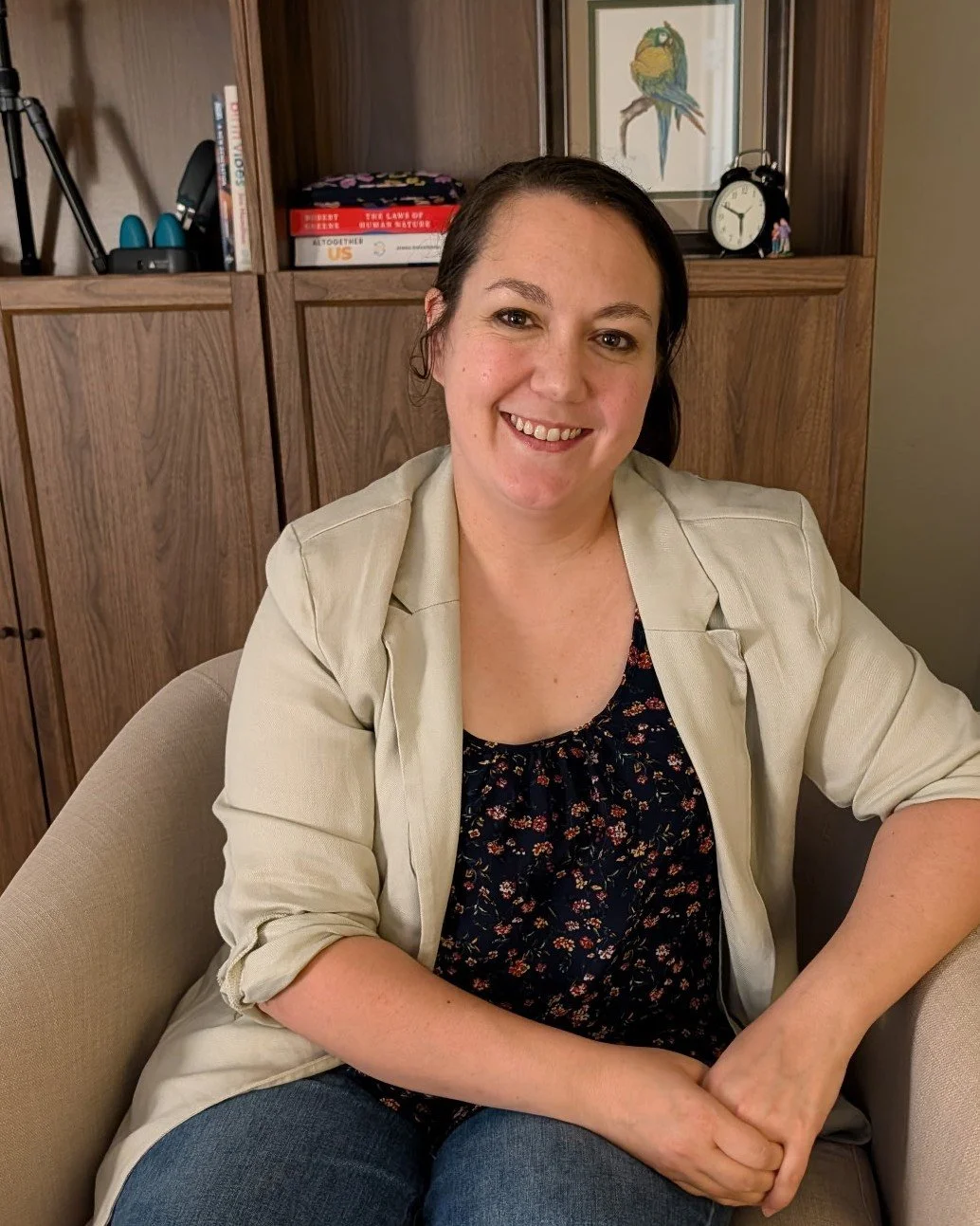
-Kelsey, LCMHCA
About My Training
Internal Family Systems or Parts Work is the foundation of how I understand people: every part of you makes sense, and every part is welcome. I've completed IFS Level 1 training, will complete Level 2 in December 2026, and am working toward IFS certification.
I'm trained in EMDR through EMDRIA, and I've completed Level 1 and Level 2 training in Integrated EMDR and IFS with Kendhal Hart. That training shapes how I blend the two approaches, so EMDR's reprocessing is led by curiosity and permission from your system rather than pushed through it. The integrated approach is best for complex trauma, deep attachments wounds, and fuller integration of positive beliefs.
I've also completed specialized training in designing and facilitating therapy intensives, and I've guided clients through multi-day intensive work. Every intensive I offer is structured around preparation, pacing, and integration, so the depth of the work is matched by the care around it.
Training & Credentials
IFS Level 1 trained; Completing Level 2 December 2026; pursuing IFS certification
EMDR Basic Training through EMDRIA
Integrated EMDR & IFS, Levels 1 & 2 (Kendhal Hart)
Training in designing and facilitating therapy intensives
Providers: Have a client who may benefit from an intensive format in tandem with your work together? I have more on that process here: Provider Referrals and Process
Not sure?
Reach out and we can explore together what may be the best fit for you. That’s exactly what the free consult call is for. I’m not a great salesman - so no pressure there. I want to connect you with the service that will be most helpful to you that respects your time and investment.
Shorter formats (1-2 days) or tailored scheduling available by consultation
Release of Information needed prior to coordinate care with your current therapist
25% deposit at time of booking
General Intensive Structure
History Taking
1
We will explore the relevant background and how it is effecting your life, experience, and relationships either in the first hour or so we are together or in a session separate from the full intensive.
I will introduce the concepts of parts and self-energy. This often includes inward focus guided meditations to help identify the 8 C’s of Self: Calm, Curiosity, Courage, Confidence, Clarity, Creativity, Compassion and Connectedness. I will guide you to help get a felt sense of what healing may feel like during and after reprocessing.
2
Exploring Self Energy
Mapping your Internal Experience
3
This is where we get creative! Through journaling, drawing, or portraying your parts through cards or sandtray figurines we will explore the different parts and experiences that relate to your current distress. This takes the most time and is transformative on its own. Most people gain a world of insight from this exercise and it is a great resource to inform any future internal exploration.
Witnessing and unburdening the original wound
4
Through an integrated approach of IFS and EMDR, and with a felt sense of permission and safety, we will explore the original images, memories, and negative beliefs that we mapped previously. Using bilateral stimulation (via a light bar, buzzies, tapping) and internal dialogue, I will guide you as your Self and Nervous system do the healing.
Integrating your insights into your present and future experiences
5
Once some of the distress is lifted and your beliefs are more aligned to where you currently are in life, we will process how that can now show up for you day to day. We will invite the qualities that have had to be pushed down for your protection to take up more space in your life.
We will review our work together and discuss options for future care. Whether this is returning to your individual therapist, continuing individual therapy with me, or if your system feels settled for the time being. I will provide you with the resources and summary of what we worked on together and can review the progress made with your current care team.
Whichever next step you decide on, I will follow up a month post-intensive to check in.
6
Explore Next Steps
Ready to get started?
Complete this Short Form
A Note on the Investment
"Why not just do weekly 50-minute sessions that insurance covers?"
Deep work can’t be rushed into a lunch hour. Your story deserves dedicated time and space.
Intensives vs. Weekly Therapy
Therapy Intensives
Great for:
Digging deeper into the pattern
Negative beliefs about yourself
Relationship dynamics that feel unchangeable
Exploring more than the logic and insight of why
Time, space, and comfort to put down the “shoulds” (at least for a little while)
Time to reach a calm and connected space to feel, witness, and reprocess the why.
Pushing past a stuck point
Exploring all sides of a major decision
Gaining clarity around a negative belief you just can’t shake
Expanding confidence and clarity around personal identity and/or relationship dynamic
Learning what generational, spiritual, or cultural beliefs are heirlooms you want to hold on to, and which are burdens that are not yours to carry
Ready to get started?
Complete this Short Form
Weekly Therapy
Great for:
Addressing current issues
The fight with your spouse
Anxiety around an upcoming work project
An established therapeutic relationship that evolves over time
Support structure
Having someone who knows your story as it continues to unfold
Accountability
Crisis management
Resource Building
Ongoing encouragement
Processing through trauma in small chunks over time
Parts of you aren’t sure if you’re ready yet
Above all else - trust yourself around pacing!
Common “Buts”
I have a therapist I love, but feel I need additional support
1
Not all therapists are trauma specialists or have the capacity in their schedule to offer intensives and that’s okay. There are so many paths to mental wellness.
There are specific approaches that are dedicated to the treatment and processing of trauma, negative beliefs due to early attachment rupture, and focus on the subcortex (where danger, attachment, and automatic responses are stored).
Internal Family Systems
Intimacy from the Inside Out (IFIO) for Couples
EMDR (Eye Movement Desensitization and Reprocessing Therapy)
Somatic Experiencing
Brainspotting
Sandtray
An intensive is a way to keep your therapist, but explore the deeper work. The 3 hour option for one stuck point, or the multi-day intensive to dig in deep would be the best options in this scenario.
I do feel I could benefit from an intensive, but I want to go slow first.
2
Not a problem! A therapy intensive is a great option during individual therapy with me (limited space available)
We would meet weekly/biweekly for standard 50 minute sessions and then add intensives when they make sense clinically.
If you already have a therapist you love and want to stay with, but would like to take it slow to build a relationship with me the Three Hour block every 2-4 weeks is a great option for you.
It allows you to keep your therapist and we can coordinate care. After a signed ROI, I can send notes, insights, etc. to your therapist and vice versa. (Only if you’d like, that is).
You don’t need to identify your childhood or life experience as traumatic to benefit from an intensive. What I often tell my clients is that their adult brain looking back can rationalize and understand that they had parents who did the best they could, that they were bullied but it doesn’t need to define them, or that others definitely “had it harder than me”.
What’s important to remember, though, is that a child’s brain experienced these events and developed these beliefs. The frontal lobe isn’t fully formed until 25. We can’t think abstractly until late adolescence or adulthood.
Sometimes those childhood experiences get stuck and those hurt parts of us continue to leak out in our choices and behaviors.
The multi-day or flexible package could be a great option for you to address these things, reprocess what is there, and gain benefits from months of weekly therapy in a shorter span of time.
I don’t have the time or capacity for weekly therapy, but I wouldn’t say I have “trauma”
3
This sounds like what I’m looking for, but cost is a factor.
4
I get it. I hate that cost is a barrier to the care people can benefit from. Unfortunately, insurance only covers 1 hour sessions, so extended sessions are a self-pay only service. That’s why I do my best to provide as many options as I can to make this work accessible and sustainable.
Financing available (through Klarna or Affirm)
Payment Plan Prior to Intensive Start
My long term plan is to have partnerships to provide scholarships to significantly reduce or cover the cost. I am also committed to holding 20% of my intensives revenue to build up a deeply discounted or pro-bono spot.
Subscribe to my newsletter to get updates on my progress. Full disclosure - it may be six months to a year before I’m able to offer this option.